
PD-Life Project Kicks Off: A Strong Start with People at the Centre
Author: Abhisweta Bhattacharjee (Project officer) / Suzanne Timmons
The PD-Life project officially began with a two-day Kick-Off meeting in University College Cork (UCC) in early May, bringing together researchers, clinicians, technology experts, and – importantly – people living with Parkinson’s and their representatives.
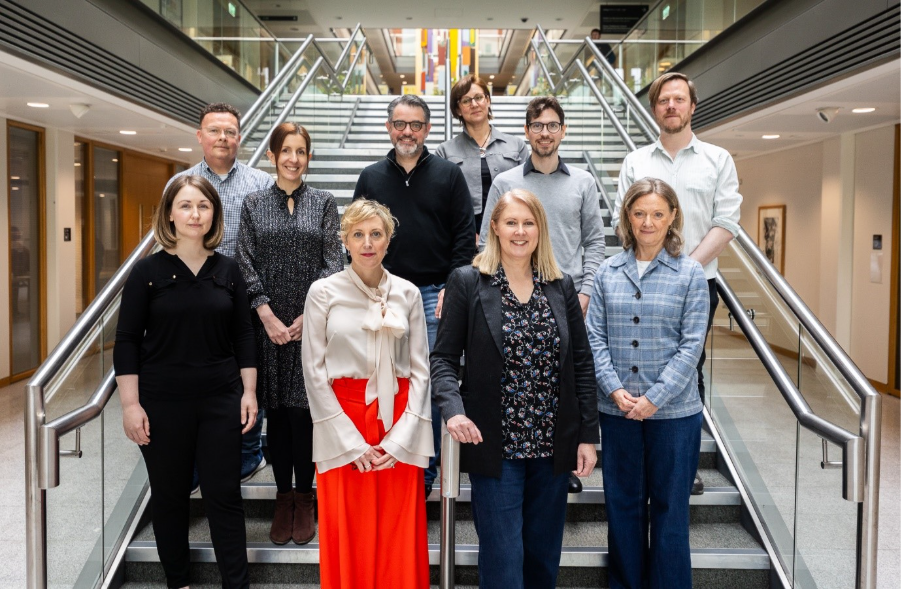
PD-Life Leadership. From left, back row: Dr. James Connolly (Ulster University), Prof. Ioana Latu (Queen’s University Belfast), Dr. Mihalis Doumas (Queen’s University Belfast), Prof. Iracema Leroi (Trinity College Dublin), Dr. Salvatore Tedesco (Tyndall National Institute), Dr. Matthew Rodgers (Queen’s University Belfast)
From left, front row: Dr. Emma O’Shea (University College Cork), Prof. Amanda Clifford (University of Limerick), Prof. Suzanne Timmons (University College Cork), Dr. Ruth McCullagh (University College Cork)
PD-Life is an all-island research project that aims to better understand how Parkinson’s affects the quality of daily life. It is led by Prof. Suzanne Timmons – Head of Centre of Gerontology and Rehabilitation in the UCC School of Medicine. What makes this project unique is its strong focus on real-life experiences and its commitment to involving people with Parkinson’s at every stage of the research.
The Kick-Off meeting marked an important first step in building this collaboration. While much of the discussion focused on planning the research, there was a clear and shared understanding across the room: this project will only succeed if it truly reflects the lived experiences of people with Parkinson’s.
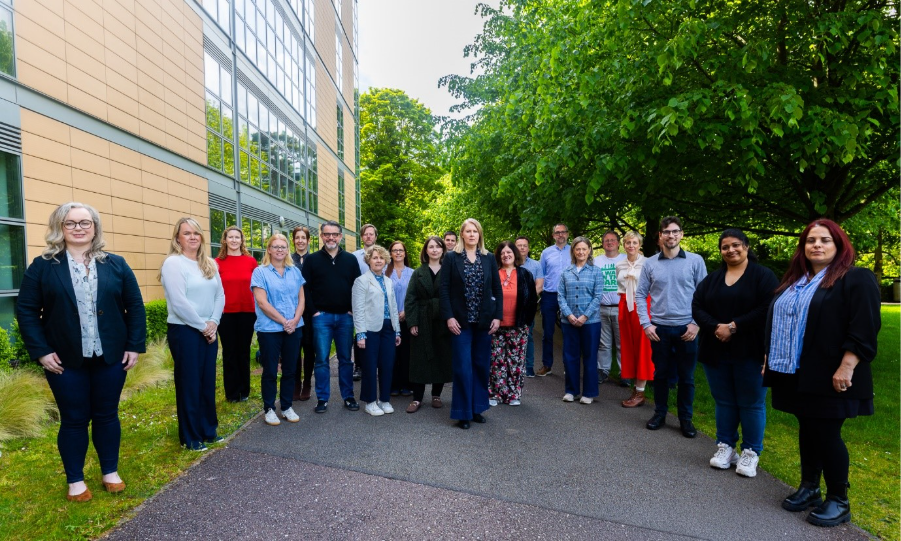
PD-Life Team at the Western Gateway Building
The Value of PPI: Voices That Shape the Research
A major highlight of the meeting was the contribution of Patient and Public Involvement (PPI) partners, including representatives from the Parkinson’s Ireland and Parkinson’s UK (Northern Ireland), who also are a part of the project steering committee.
Their input was not just welcomed – it was essential.
Discussions throughout the two days showed how PPI partners are helping to shape key decisions. They will also guide what information is collected and how it is asked, helping researchers avoid unnecessary burden for participants. For example, they will play a central role in designing surveys and interviews, ensuring that questions are relevant, respectful, and meaningful. Just as importantly, they will shape the key messages that are shared throughout the project
There was also valuable input on practical aspects of the project, such as how best to reach people beyond existing Parkinson’s networks. Suggestions included using community events, radio, and more accessible outreach methods to ensure a wider range of voices are heard.
This level of involvement reflects a clear commitment: research should not be done on or for people with Parkinson’s Disease, but with them.
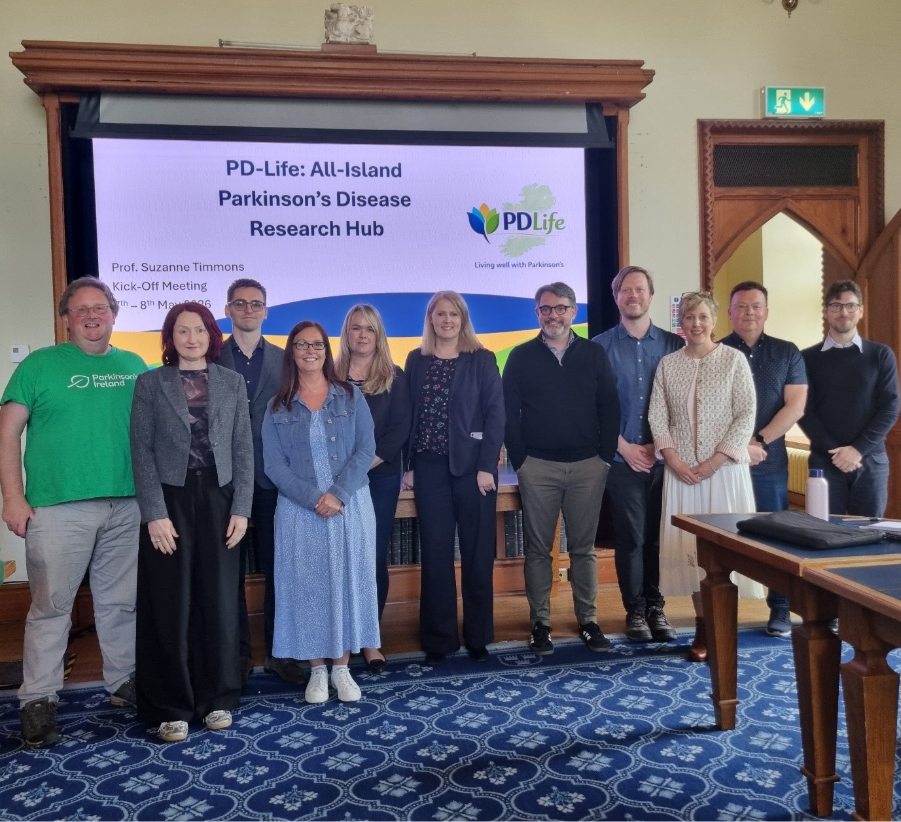
People with lived experiences at the centre of PD-Life. From left: Jerome Maume (Parkinson’s Ireland), Prof Aideen Sullivan (University College Cork), Shane O’Brien (Parkinson’s Ireland), Emma McKeown (Parkinson’s UK Northern Ireland), Lisa Wynne (Parkinson’s Ireland), Prof Suzanne Timmons (University College Cork), Dr. Mihalis Doumas (Queen’s University Belfast), Dr. Matthew Rodger (Queen’s University Belfast), Prof. Amanda Clifford (University of Limerick), Dr. James Connolly (Ulster University), Dr. Salvatore Tedesco (Tyndall National Institute)
PPI Panels: Building a Structure for Ongoing Involvement
To support this, the project is now setting up a dedicated PPI panel across the island of Ireland.
The plan is to establish a main panel of 10 members (from both the South and North of Ireland), who will help guide all aspects of the project, ensuring the focus and direction aligns with people’s needs. The panel will also be part of the project’s governance, meaning they will have a voice in how the project is run, not just what it studies. In-person meetings are being planned alongside online engagement to make participation as accessible as possible. Training and support will also be provided to ensure that everyone involved feels confident contributing.
This all-Ireland panel is supported by small local panels, who will be involved in individual PhD student projects, representing local people with Parkinson’s, and helping these junior researchers to better understand the lived experience of Parkinson’s.
Growing the Team: More Researchers Join PD-Life
A key piece of good news shared at the meeting was that the PD-Life team has grown. Thanks to additional funding secured by the consortium, two more PhD researchers will join the project – increasing the number from nine to eleven. This joins the 7 postdoctoral researchers (more experienced) funded through the project, and the 20+senior researchers within the project.
This expansion strengthens the project’s ability to explore Parkinson’s from multiple perspectives and reflects the strong momentum behind PD-Life so early in its journey.
Looking Ahead: Research, Technology, and Real Life
The PD-Life project will explore a wide range of areas, including physical activity, mental health, and stigma, and how different personal factors (such as age, gender, and background) shape the experience of Parkinson’s.
Some parts of the research will involve the use of wearable devices to better understand movement and physical activity in everyday life. Others will focus on surveys and conversations to capture personal experiences. Throughout all of this, there is a strong emphasis on making participation manageable and meaningful for those involved.
A Promising Start
The energy at the kick-off meeting was one of collaboration, openness, and shared purpose. Researchers and PPI partners worked side by side, laying the foundation for a project that aims not just to generate knowledge, but to make a real difference.
As PD-Life moves forward, the continued involvement of the Parkinson’s community will remain at its heart.