
Supports
Further supports available to you & your loved ones
Frequently Asked Questions
Parkinson’s Passport
Motor Symptoms Diary
Entitlements & Supports Available
Whether you are a person with Parkinson’s or a care partner, it is important that you are claiming all entitlements that you are eligible for, and availing of all supports available to you. Please click here to find out more about entitlements.

A-Z Dictionary
Meeting your Parkinson’s Consultant
To help you get the most from your visit with your neurologist or geriatrician, below is a link to a PDF file with some questions to be considered and bring to your meeting. We recommend printing this document and filling it in prior to the meeting.
Please click here for information on meeting your Parkinson’s consultant.
Deep Brain Stimulation
Please click here for information on Deep Brain Stimulation Deep Brain Stimulation Leaflet
Irish Medication Safety Alerts
Parkinson’s Ireland are excited to be involved in the update of the IMSN (Irish Medicines Safety Network) Parkinson’s Safety Alert. Our involvement in this project encompasses our key objectives of education to all, people with Parkinson’s, care partners and health professionals, and advocacy for our members.
It is hoped that this safety alert will raise awareness among medical professionals who might be providing care for a person with Parkinson’s disease in their setting, emphasise the significance of managing a person’s medication, lessen harm to those who have the disease, prevent instances of medication errors or delays, and prevent the administration of drugs that are not appropriate for a person with Parkinson’s Disease.
We are delighted to have had the opportunity to collaborate with a fantastic working group. We believe the updated safety alert will complement our Parkinson’s passport tool very well, increasing awareness and alleviating stress for people with Parkinson’s.
You can access the alerts here.
Mental and Emotional Heath Supports
We are very much aware of the non-motor symptoms that those with Parkinson’s may experience. These can include the category of psychological or psychiatric symptoms such as anxiety, depression and apathy.
Speaking about mental health/ emotional health/ psychological wellbeing is a topic that is sometimes overlooked and stigmatised.
It is crucial to speak about these symptoms, if you are experiencing them, just as you would if you had a physical symptom or complaint. Work life, family life and health can contribute to a change in your mental health. There are multiple stressors that can heighten the load.
A study in 2022 by Weintraub, Daniel et al suggest that approximately 50% of people with Parkinson’s may experience one of the below symptoms:

Within Parkinson’s a physical symptom (tremor or freezing) or wearing off of medication, can accelerate psychological symptom such as anxiety which in turn increases the tremor and leads to a spiral effect. Knowing this is the key and learning how to break that cycle is an important step.
The WHO define good mental health as a state of wellbeing where individuals are able to:
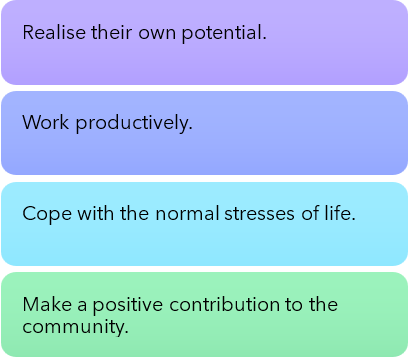
It is important to remember, that positive mental health is not simply the absence of mental health issues such as depression or anxiety. It is the feelings of positive characteristics such as purpose and contentment, display of positive emotions such as optimism, happiness, satisfaction and good self-esteem, the ability to maintain relationships and goal setting.
There are three areas you can look at to adopt a Positive Mental Outlook:

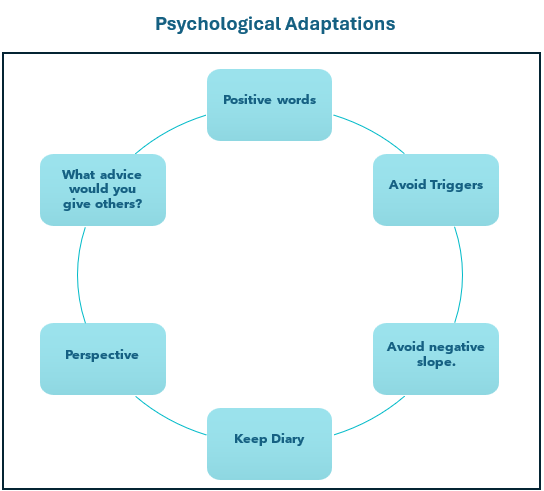
It is important to speak with your GP or Parkinson’s team if you’re experiencing symptoms that are impacting your mental health. It may not be easy to address issues, but it is important to look after both your physical and mental health to live well. Seek supports from the necessary services. For further information see signposting resources below.
Video Resources
A brief overview is provided of what Parkinson’s Ireland can offer to people with Parkinson’s. Knowledge of Parkinson’s, the supports available, and medication and symptom management are outlined.>
Patricia Finnerty, Continence Nurse Specialist, Primary Care CHO8, begins by discussing bladder issues in Parkinson’s, including difficulties with storing and emptying. The goal in managing anyone with bladder problems is to rule out any other issues that may be age-related. After this, it is important to identify any Parkinson’s-specific bladder issues.
This video, researched and presented by HSE Speech and Language Therapist Elaine Geoghegan, Primary Care Mullingar, outlines a range of local and national supports available to people with a long term health condition and to those who care for them, including health services, voluntary organisations, community supports, education programmes, and carer-specific resources. The aim of this video is to help carers better understand what support is available, how to access it, and where to turn for information, advice, and ongoing help.
These videos were produced following the development of a Parkinson’s group, led by Speech and Language Therapists, supported by multidisciplinary colleagues and local people living with Parkinson’s in the Mullingar Primary care area. This project was facilitated by Parkinson’s Ireland and other agencies and funded by Spark Seed and the HSE.
GP Services
Your GP is often the first point of contact for accessing mental health assistance. While discussing mental health concerns with your GP may initially feel challenging, remember that they are there to help and can provide guidance on available resources. In cases of crisis or emergency, there are numerous helplines available for immediate assistance. Click for GP Out of Hours Services .
Additional Services
Pieta House provides free therapeutic support. They can be contacted 24 hours a day by phone on 1800 247 247.
They also offer a text service – Text HELP to 51444 (standard message rates apply).
Visit Pieta for more information.
Samaritans provide a free support service and are available 24 hours a day on freephone 116 123. Visit Samaritans for more information.
Text About It is a free, anonymous messaging service which is operational 24/7. To engage with this text HELLO to 50808. Providing everything from a calming chat to immediate support for people going through a mental health or emotional crisis. Visit Text About It for more information.
Emergency services. If you or someone you know is that immediate risk of harm, go to or call the emergency department of your local general hospital. You can also contact emergency services on 112 or 999 anytime day or night. You can call the HSE Your Mental Health Information Line on free phone 1800 111 888 anytime day or night, for information on mental health services in your area.