
Symptoms
Symptoms of Parkinson’s can be Movement and Non-movement related.
When most people think of Parkinson’s Disease (PD), they think of tremors, stiffness or slowness of movement.
However, PD can also affect thinking, behavior and mood. These changes can bring their own challenges and frustrations as they often impact the quality of life. Each person with PD is different, and many people do not develop each symptom.
There are over 40 symptoms associated with PD and everyone’s experience with it is different.
This page contains information leaflets on a variety of symptoms, ranging from motor, non motor and mental health. You will also find our motor diary to track your symptoms here.
Please scroll to the bottom of this page for further mental health supports for you and your loved ones.
Motor
- Tremor
- Motor Fluctuations
- Posture and Falling
- Motor Diary
Non Motor
- Bladder and Bowel
- Restless Legs Syndrome
- Blood Pressure
- Pain
- Sleep
- Fatigue and Parkinson’s Disease
- Eye Problems
Mental Health
- Anxiety and Parkinson’s
- Depression and Apathy
- Hallucinations
- Impulsive-Compulsive Behaviours
- Cognitive
Tremor
Motor Fluctuations
Posture and Falling
Motor Symptoms Diary
Bladder and Bowel
Restless Leg Syndrome
Blood Pressure
Pain
Sleep
Fatigue
Eye Problems
Anxiety
Depression
Hallucinations
Impulsive-Compulsive Behaviour
Cognitive
Mental Health Supports
We are very much aware of the non-motor symptoms that those with Parkinson’s may experience. These can include the category of psychological or psychiatric symptoms such as anxiety, depression and apathy.
Speaking about mental health/ emotional health/ psychological wellbeing is a topic that is sometimes overlooked and stigmatised.
It is crucial to speak about these symptoms, if you are experiencing them, just as you would if you had a physical symptom or complaint. Work life, family life and health can contribute to a change in your mental health. There are multiple stressors that can heighten the load.
A study in 2022 by Weintraub, Daniel et al suggest that approximately 50% of people with Parkinson’s may experience one of the below symptoms:

Within Parkinson’s a physical symptom (tremor or freezing) or wearing off of medication, can accelerate psychological symptom such as anxiety which in turn increases the tremor and leads to a spiral effect. Knowing this is the key and learning how to break that cycle is an important step.
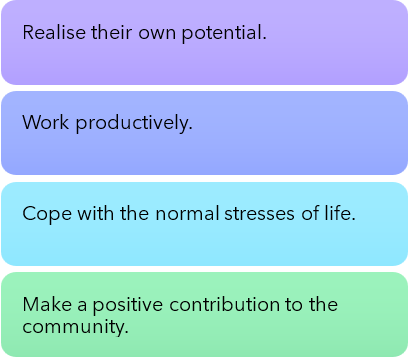
The WHO define good mental health as a state of wellbeing where individuals are able to:
There are three areas you can look at to adopt a Positive Mental Outlook:

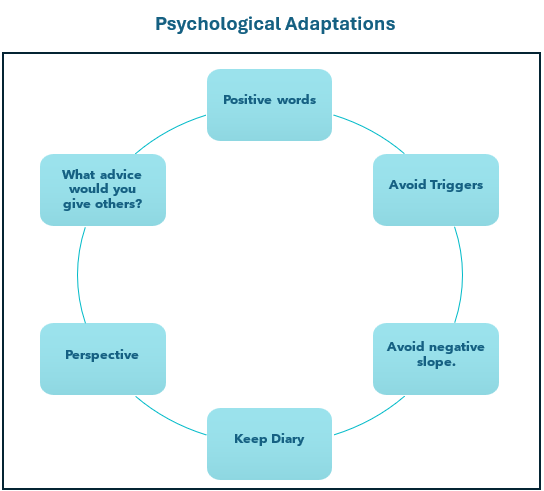
It is important to speak with your GP or Parkinson’s team if you’re experiencing symptoms that are impacting your mental health. It may not be easy to address issues, but it is important to look after both your physical and mental health to live well. Seek supports from the necessary services. For further information see signposting resources below.
If you would like to speak with one of our Parkinson’s nurse specialist, please contact 1800 359 359. Please note this is not an emergency support line, we are happy to discuss your Parkinson’s management & symptoms but if in a crisis please consider the below services.
GP Services
Your GP is often the first point of contact for accessing mental health assistance. While discussing mental health concerns with your GP may initially feel challenging, remember that they are there to help and can provide guidance on available resources. In cases of crisis or emergency, there are numerous helplines available for immediate assistance. Click here for GP Out of Hours Services.
Additional Services
Pieta House provides free therapeutic support. They can be contacted 24 hours a day by phone on 1800 247 247.
They also offer a text service – Text HELP to 51444 (standard message rates apply).
Visit Pieta for more information.
Samaritans provide a free support service and are available 24 hours a day on freephone 116 123. Visit Samaritans for more information.
Text About It is a free, anonymous messaging service which is operational 24/7. To engage with this text HELLO to 50808. Providing everything from a calming chat to immediate support for people going through a mental health or emotional crisis. Visit Text About It for more information.
Emergency services. If you or someone you know is that immediate risk of harm, go to or call the emergency department of your local general hospital. You can also contact emergency services on 112 or 999 anytime day or night. You can call the HSE Your Mental Health Information Line on free phone 1800 111 888 anytime day or night, for information on mental health services in your area.